3 Flagship AI Image Models, 1 Perfume Ad: Who Actually Delivers?
A 2026 product-poster shoot-out: Seedream 5.0 Pro vs GPT Image 2 vs Midjourney V8.1. Same prompt, same references. Three very different outputs — and a counterintuitive lesson about what cheap actually costs in credits.
1. The Setup
A 2026 product-poster shoot-out: Seedream 5.0 Pro vs GPT Image 2 vs Midjourney V8.1. Same prompt, same references, same task. Three very different outputs — and a counterintuitive lesson about what "cheap" actually costs.
The task is real, not a benchmark toy. Take one model reference and one product reference, generate one finished perfume ad poster:
- Person reference: a woman with dark hair, wearing a metallic silver avant-garde dress, neutral expression.
- Product reference: the Aurelia Blanc perfume bottle — clear glass, golden liquid, white square cap.
- Target output: a poster. Woman holds the bottle. Copy reads "Aurelia Blanc — L'Esprit de Lumière". Scene: minimalist white marble, palm-leaf shadow accents, premium perfume ad aesthetic.
Prompt (identical across all three models):
Editorial perfume advertisement. Elegant dark-haired woman in metallic silver avant-garde dress (matching reference), holding a luxury perfume bottle labeled "AURELIA BLANC" with golden liquid and white square cap. Minimalist white marble interior, soft directional side light, palm leaf shadow accents. Copy text: "AURELIA BLANC — L'ESPRIT DE LUMIÈRE". Premium perfume ad campaign, metallic sheen, cream-and-gold palette, refined commercial photography, photorealistic.
Each model was run once. No cherry-picking. What follows is what came back.
On the MJ setup: MJ V8.1 ran text-only for this test. Whether MJ V8.1 fully supports reference images through--sref/--cref/--orefis contested — some guides list these as available, others report V8.1 dropped them as a trade-off for other improvements. Rather than wade into that debate, we ran MJ as the integration exposes it by default: text-only. Seedream 5.0 Pro and GPT Image 2 received both reference images through a standard multi-image field.
2. The Three Outputs
Seedream 5.0 Pro — 4 credits / ~14 seconds
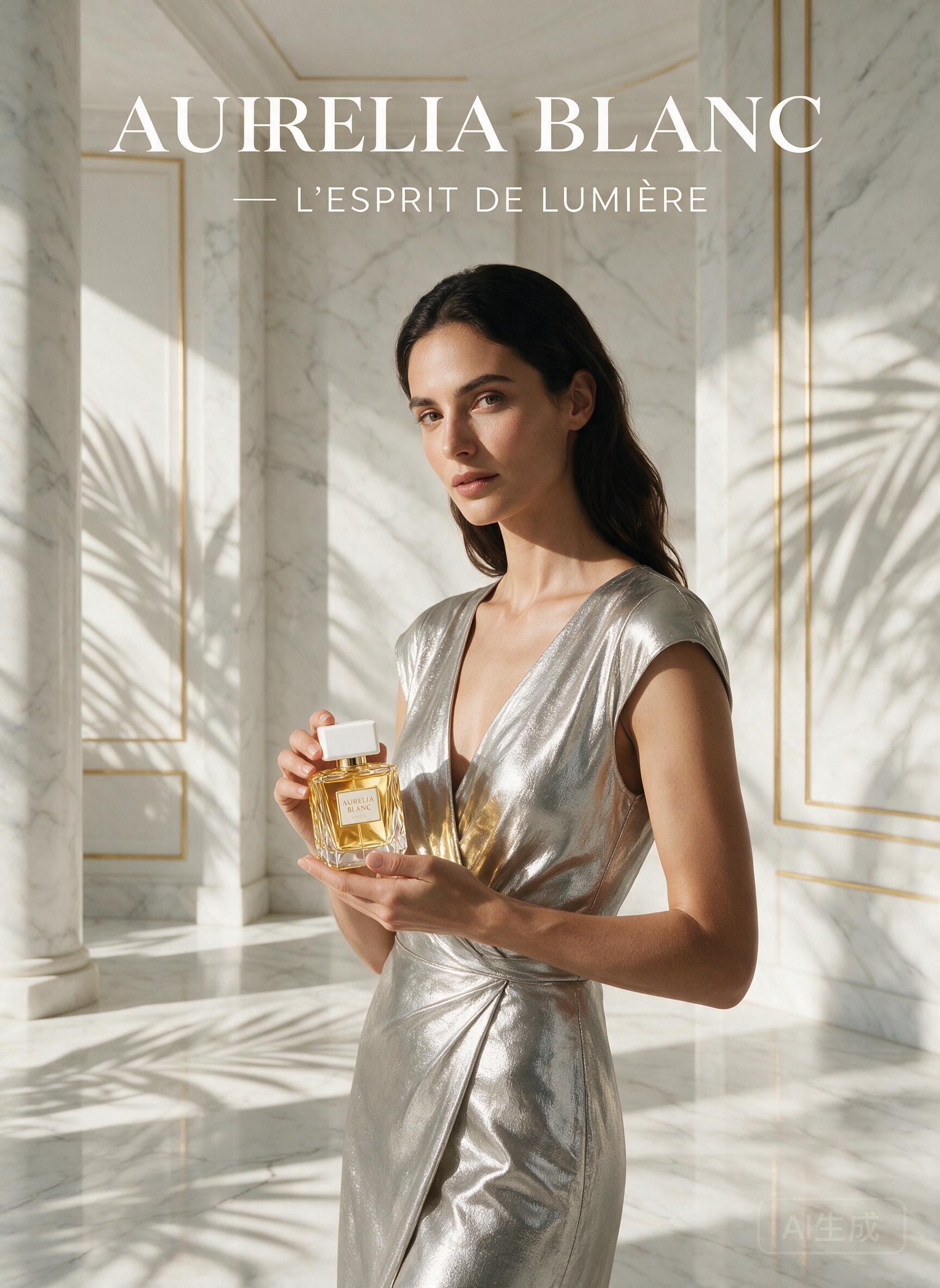
The pose is elegant, weight shifted slightly to create motion. Both hands hold the bottle naturally — one underneath, one at the neck — a deliberate, practiced grip. The bottle is the right size, the label "AURELIA BLANC" renders cleanly with no garbled characters. Soft diffused light, palm-leaf shadows, marble background — the luxury visual grammar is complete. Commercial-ready as-is. This is the strongest poster of the three.
One-line verdict: Most complete composition, most considered grip, highest finished-poster quality.
GPT Image 2 — 7 credits / ~22 seconds
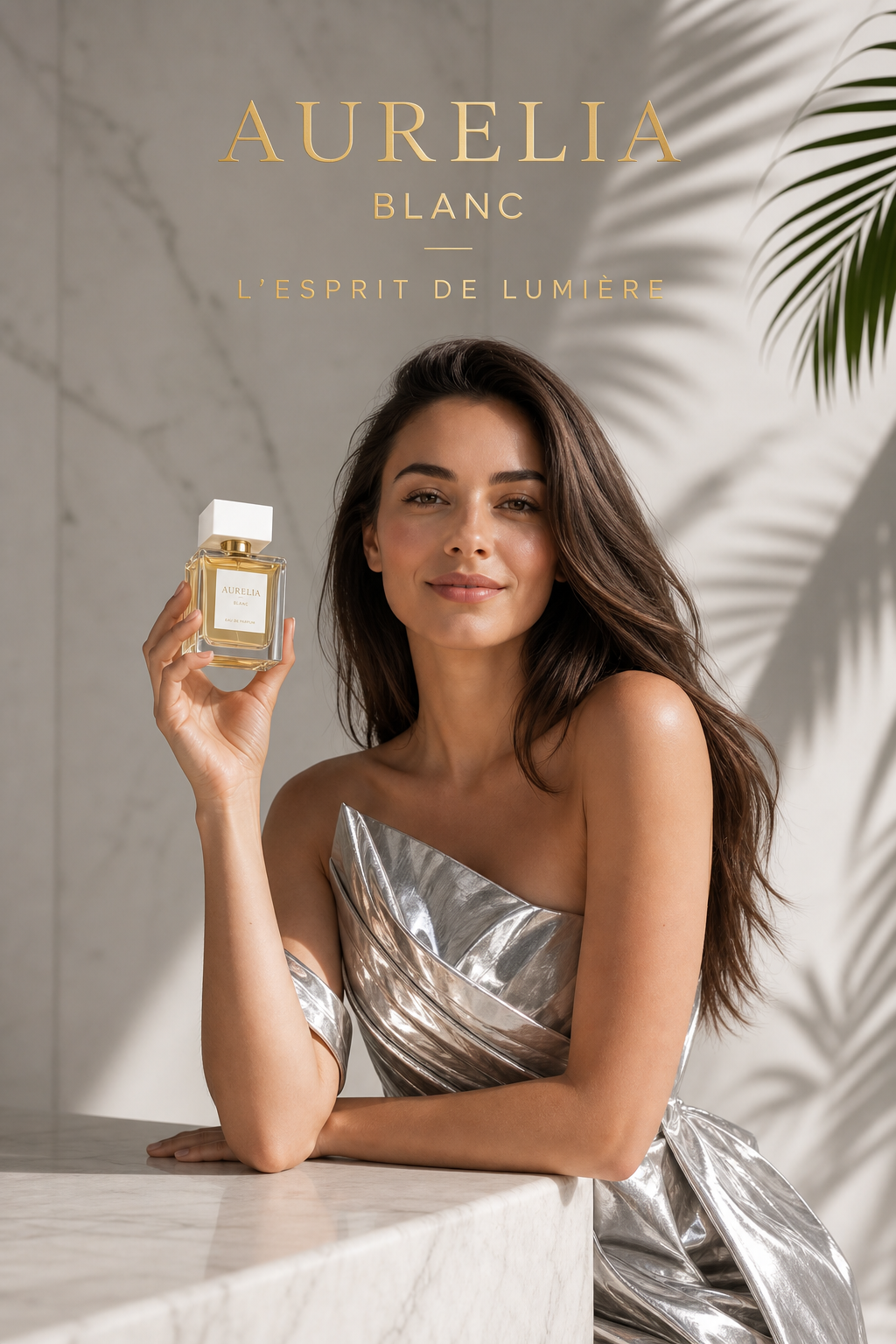
The woman looks the most like the reference photo — GPT Image 2 is unusually faithful to the input face and dress. Right hand holds the bottle, left hand rests on the surface — relaxed and believable. Bottle proportions are correct, the grip reads as a real pose, label is legible. Lighting is gentler, contrast lower than 5.0 Pro. The result feels more like a sample shot than a poster — quieter, more naturalistic, less obviously "ad". Where 5.0 Pro sells the brand, GPT Image 2 documents the product.
One-line verdict: Like a sample, not an ad. Real texture, most believable hand-bottle relationship.
Midjourney V8.1 — 7 credits / ~18 seconds
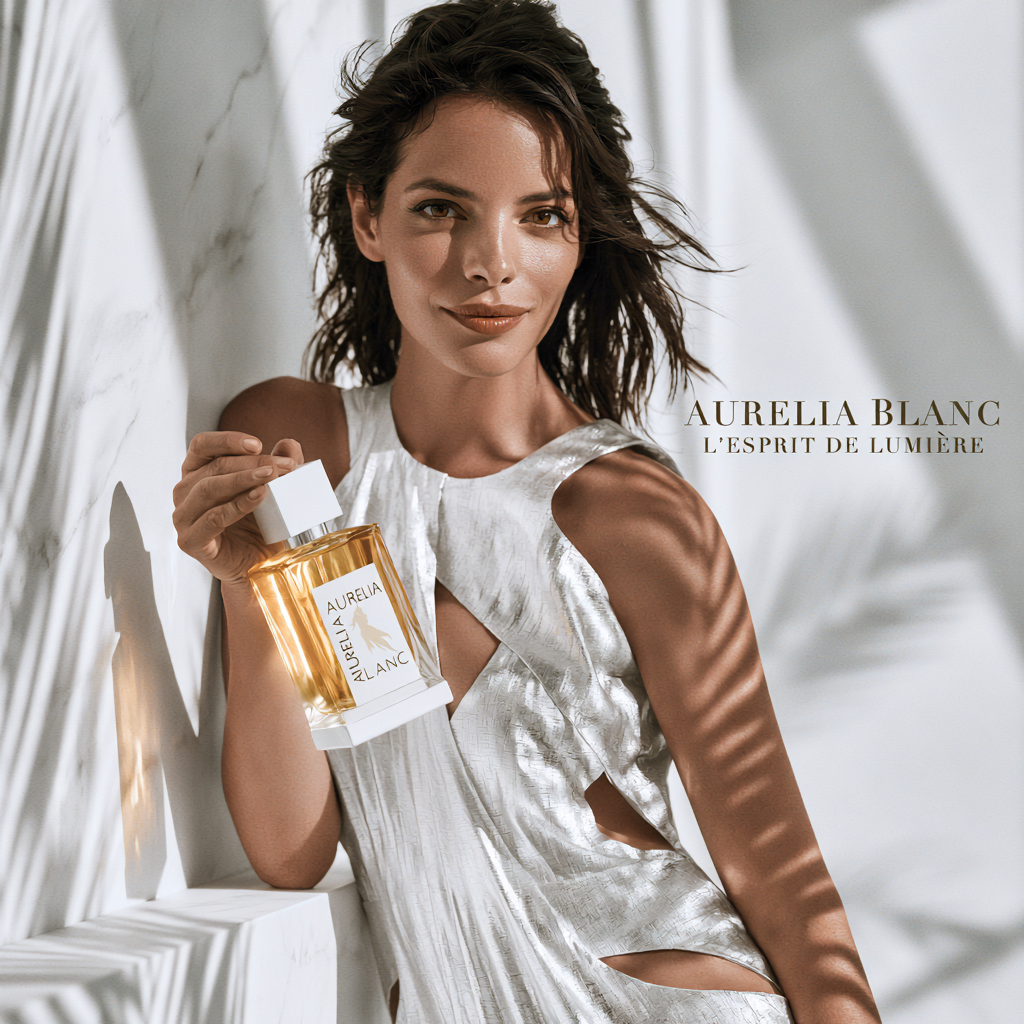
The model has presence — MJ V8.1 still leads on figure attitude and editorial mood. Background is clean, negative space is generous, the visual impact is immediate. But the product side breaks. The bottle is clearly too large for the hand. The fingers don't naturally wrap the bottle — they suggest holding without actually gripping. The product, the entire point of the ad, reads as an afterthought pasted into a stylish scene.
One-line verdict: Strong presence, but the bottle overwhelms the hand. The product side collapses.
3. Why Reference Images Decide Product Ads
Three flagship models, three completely different relationships with the product. That's not random variation — it traces directly to whether the model could see the actual product.
Seedream 5.0 Pro and GPT Image 2 both ingested the real Aurelia Blanc bottle photo. Their outputs get the bottle size right, get the hand-bottle relationship right, get the label right. They are working from data.
Midjourney V8.1 ran text-only. It imagined "a perfume ad" from training distribution, then rendered a stylish woman holding a generic bottle-shaped object. The hands and the bottle failed because MJ had no ground truth to anchor to — it was drawing a memory of a perfume ad, not the specific perfume.
This is the 2026 edition of the "AI hands and object scale" problem. The frontier moved, the failure mode didn't. For any task where the product matters, reference-image capability is the whole game. A more powerful text-only model still loses to a less powerful model that can see the product.
4. The Money Angle (Where It Gets Counterintuitive)
On a VivifyAll Pro plan ($47.17/mo, 800 credits), per-image prices look like this:
- Seedream 5.0 Pro (720p): 4 credits → ~200 images/month
- GPT Image 2: 7 credits → ~114 images/month
- Midjourney V8.1: 7 credits → ~114 images/month
But credit price is only half the story. The other half is how many of those images are usable in a product-ad context:
| Model | Credits per image | Failure rate in product-ad tasks | Effective cost per usable image |
|---|---|---|---|
| Seedream 5.0 Pro (720p) | 4 | low — first-pass hit | ~4 credits |
| GPT Image 2 | 7 | low | ~7 credits |
| Midjourney V8.1 | 7 | high in product-ad contexts | ~14–21 credits (2–3 retries) |
Here is the trap. MJ and GPT Image 2 cost the same per call in credits. But in product-and-person ads specifically — where the product has to look right — the "bottle eats the hand" failure mode repeats for text-only models. Users retry, retry, retry. Two or three attempts to land a usable product shot is normal. At that point the 7-credit image has cost 14–21 credits, and ten minutes of attention on top.
Per finished usable image, Seedream 5.0 Pro at 4 credits is the cheapest of the three by a wide margin.
This is the marginal-cost argument that matters in 2026: utility per credit, not credits per call. As budgets tighten, the question stops being "which model is cheapest?" and becomes "which model gives me a usable asset for the least total credits?" On that question, the answer here is unambiguous.
Who should pick what:
- Small sellers running product ads → Seedream 5.0 Pro. First-pass hits save both credits and time. 4 credits per finished image lets a Pro plan cover ~200 product ads a month — sustainable volume for e-commerce pipelines.
- Designers in exploration mode → GPT Image 2. Best identity preservation across iterations. If you need the same model in 10 different scenes, GPT Image 2 keeps her face consistent where others drift.
- Stylized creative where the product isn't literal → Midjourney V8.1. If the task is "atmospheric editorial", not "show this exact bottle", MJ's figure attitude and mood still win, and the per-call credit cost is genuinely competitive.
5. The Honest Lesson
Calling MJ V8.1 a failure would be dishonest. The figure presence is real. The mood is real. The composition is editorial-grade. What failed is narrower: in the specific scenario where the model has to render a specific, real-world product in a specific, real-world hand, text-only models still don't have the ground truth to nail it.
This isn't a Midjourney problem. It's a text-only vs reference-aware problem. Put GPT Image 2 or Seedream 5.0 Pro in text-only mode and you'd see the same product-scale drift. The capability that matters isn't "which flagship" — it's "can the model see the product".
The practical takeaway: in VivifyAll (or any tool that exposes this choice), route product-and-person ads to a reference-capable model. Save MJ for the mood boards, the concept explorations, the editorial portraits where atmospheric impact matters more than product fidelity. That's not a limitation of MJ — it's the right tool for the right job.
The failure image above isn't an indictment. It's a teaching sample. The next time you see a perfume ad where the bottle looks slightly off, slightly too big, slightly un-held — you'll know exactly why.
Bottom Line
For product-and-person advertising: Seedream 5.0 Pro ships a finished poster on the first pass. For stylized figure work where the product isn't literal: MJ V8.1 is still the fastest aesthetic signal. GPT Image 2 sits in between — most faithful to references, gentlest in tone, best when you need the same person across many scenes.
Run the same test yourself with your own product: open vivifyall.com/image, pick the Multi-Reference · Product Poster quick-start card, drop in your product photo plus a model reference, and see which model gets your bottle right on the first try.
The cheap image isn't always the cheap image.
Try It Yourself
Ready to create your own AI videos and images? Start with 30 free credits on VivifyAll.
Start Creating for FreeMore Articles
Ready to Create?
Try any of our 26 AI models and start generating videos and images today.
Start Creating